Textiles & Everyday Life
Loungewear Across the Seasons: Understanding Flax Fabric Weight and Care
Loungewear lives in the interval between being dressed and being entirely at ease. Linen, made from flax, has a particular talent for inhabiting that interval: airy without being insubstantial, relaxed without being shapeless, and comfortable in ways that shift with the weather. To choose it well, look beyond the word “linen” to weight, weave, finish, and the ordinary rituals of care.
The comfort of a fabric that changes its mind
Clothing is often described as if it had a single, stable personality. Linen is breathable. Linen wrinkles. Linen is cool. Such shorthand is useful in a shop, but less so in a changing room, where one pair of linen trousers may feel crisp and substantial while another seems almost weightless. The difference is not a contradiction. It is a reminder that a fiber is only the beginning of a fabric’s character.
Linen is made from the fibers of the flax plant. Those fibers are naturally strong, and they can be spun and woven into cloth with a wide range of weights and textures. The finished material’s behavior depends on the yarn, the weave, the density of construction, and any washing or finishing applied afterward. A garment’s cut matters too: a loose shirt permits air to move differently from a close-fitting top, even if both are made from the same cloth.
For loungewear, these distinctions matter because the garment is expected to keep company with several versions of the day. It might be worn over a warm breakfast, through a spell of afternoon work at home, or while the house cools after sunset. The ideal fabric is not necessarily the lightest one. It is the one whose weight and construction suit the wearer, the room, and the season.
What fabric weight can—and cannot—tell you
Fabric weight is commonly expressed in grams per square metre, abbreviated as g/m² or gsm. In general, a higher number means more material in a given area; a lower number often suggests a lighter cloth. It is a useful point of comparison, but not a complete forecast of how a garment will feel. Two fabrics with the same weight can differ noticeably because one is woven more openly, one has been washed, or their yarns have different characteristics.
Weight is also not a direct synonym for warmth. A dense fabric may feel protective, while an open weave of similar weight may allow more air to circulate. A garment’s coverage, fit, and layering all play their part. The number on a specification sheet should therefore be treated as a clue, not a verdict.
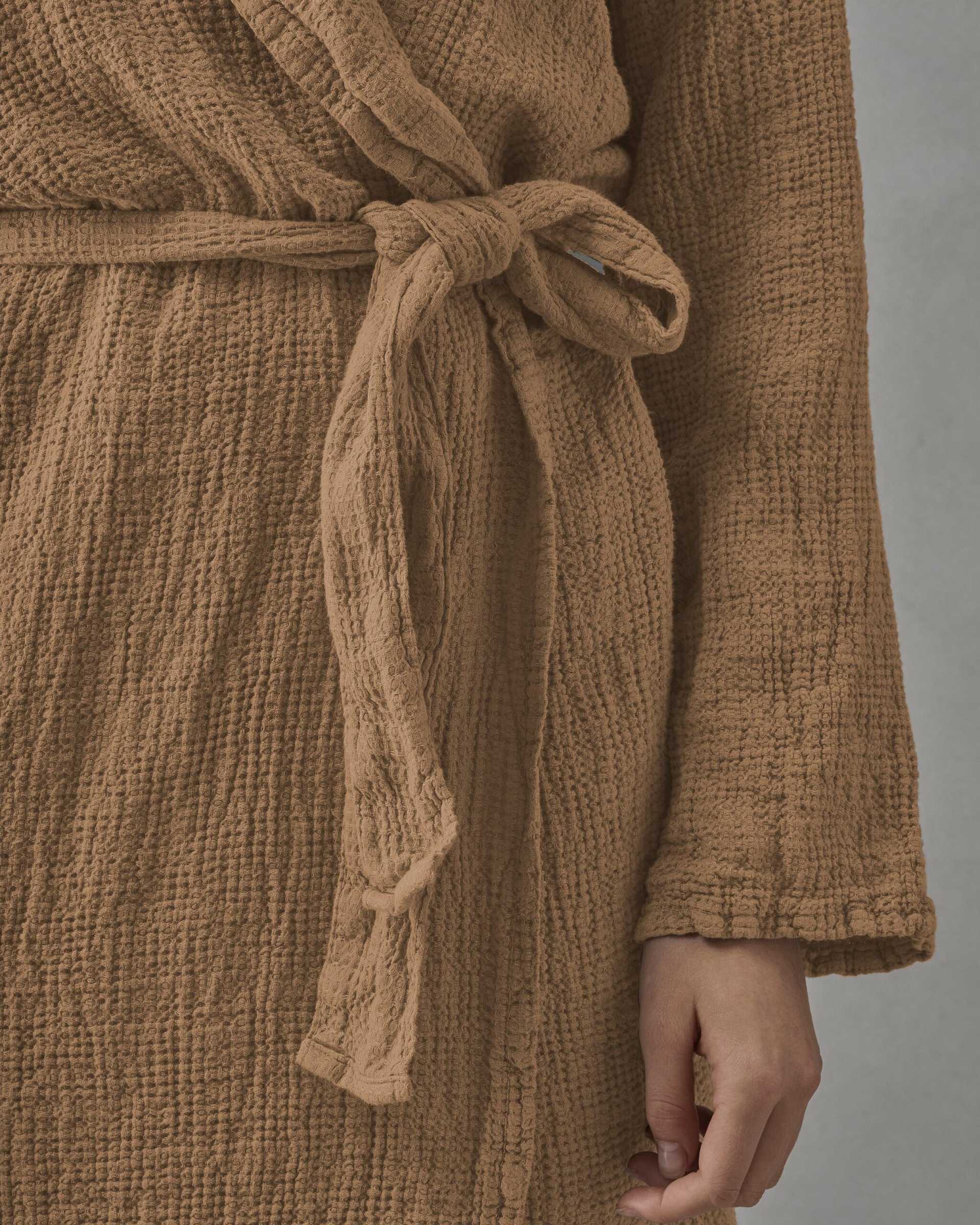
One available reference point is the Lipe New Robe, described as a 100% linen waffle-weave bathrobe weighing 230 g/m². Its three-dimensional waffle construction is intended to increase absorbency and reduce drying time, while the product description also characterizes it as light and durable. That figure can help make fabric weight less abstract, but it should not be taken as a universal threshold for robes—or as a guarantee that another cloth at the same weight will feel the same. The weave and garment design remain part of the story.
When specifications are provided, compare like with like where possible: fabric composition, stated weight, weave, and finish. If the weight is not listed, the garment’s description and care label may still offer practical clues. A garment described as airy, gauzy, or loosely woven will generally behave differently from one described as substantial or closely woven. These terms are not standardized measures, but they can help set expectations.
Weave: the quiet architecture of comfort
Weave is the arrangement of threads crossing one another to make cloth. It can be easy to overlook because, unlike a color or a collar, it may not announce itself at first glance. But weave influences drape, texture, air movement, and how a fabric meets the skin. In linen loungewear, that influence can be as consequential as weight.
A relatively open construction may feel breezy and fall softly, making it appealing in warm weather. It can also be more susceptible to snagging or distortion, depending on its yarns and construction. A tighter, firmer weave may have a more defined shape and feel less transparent, though it may seem warmer or less fluid. Neither is inherently better. The question is whether its properties suit the garment’s purpose.
Waffle weave offers a more visible example of structure at work. Its raised and recessed pattern gives the cloth a textured surface rather than a flat one. In a robe, this can contribute to absorbency and help the fabric dry efficiently, as the description of the Lipe New Robe notes. In other loungewear, woven texture may affect how a garment drapes or how much it clings. The effect will depend on the particular cloth, so a fabric name alone should not be asked to carry too much information.
Fit changes the experience as well. A relaxed cut can give air room to circulate and let linen move with the body. A more fitted garment may feel neater but can reduce that sense of ventilation. If comfort across seasons is the goal, consider whether the garment can accommodate a layer underneath or over it, and whether its shape allows comfortable movement while sitting, stretching, or sleeping.
A year in flax: choosing for the room, not the calendar
Seasonal dressing is usually discussed outdoors: the coat needed for the walk, the shoes for the rain. Loungewear is governed by a different weather system. There is the temperature of the home, the warmth of the bedding, the pace of the day, and the wearer’s own preference. A person who runs warm may want light, loose linen long after the weather has cooled; someone who likes a cocooning feel may prefer a denser garment even in spring.
In summer, lighter linen and open constructions can feel especially easy to wear. Loose silhouettes give air room to move, while short sleeves and generous leg openings reduce the sense of enclosure. Still, the thinnest fabric is not automatically the most comfortable. A cloth that feels too transparent or delicate may be less useful for lounging than a slightly more substantial one, particularly if the garment is worn frequently or washed often.
In autumn, linen works well as a layer rather than a forecast of warmth by itself. A long-sleeved shirt or roomy robe can sit over a lightweight base layer, and the outfit can be adjusted as the house warms or cools. Texture begins to matter more: a cloth with body may feel reassuring, while a softer, washed finish can retain a relaxed quality without feeling stiff.
In winter, linen is not a substitute for insulation. Its usefulness lies in how it can be combined with warmer pieces. A loose linen garment over a close-fitting layer, or beneath a heavier robe or cardigan, can provide an adaptable indoor arrangement. If the room is cold, prioritize warmth from layering and fit rather than assuming that linen alone will supply it.
In spring, changeable indoor temperatures make flexible garments valuable. A robe with room for a layer underneath, or a pair of trousers that works with both a light top and a warmer sweater, can bridge the gap between chilly mornings and brighter afternoons. Spring also offers a good reason to inspect garments after winter storage: a little fresh air, a careful wash when needed, and a check of seams and closures may be all that is required before returning them to rotation.
The season, in other words, is not the sole measure. Think of a garment’s role: a sleep layer, a cover-up after bathing, a shirt for reading on the sofa, or an outer layer for moving about the house. Each has different demands. A robe that is expected to absorb water has a different job from a linen top worn over sleepwear, even if both belong to the broad and pleasantly imprecise world of loungewear.
Finish and feel: why first impressions can mislead
New linen can feel crisp, dry, or slightly firm. Washing and finishing may soften it before it reaches the wardrobe, and regular use can alter its hand further. A garment-washed finish, for example, is intended to give fabric a more relaxed feel from the outset. Other finishing processes may influence surface smoothness, drape, or color. The exact effect depends on the material and the manufacturer’s methods.
Softness is not a reliable measure of quality on its own. A very soft fabric may feel immediately inviting, while a firmer one may become more comfortable with use. Nor does every linen garment soften in precisely the same way. Fiber quality, yarn, weave, finishing, and laundering all contribute. It is more useful to ask whether the garment feels appropriate for its purpose and whether its construction seems sound: seams should lie flat, closures should work, and the fabric should suit the amount of movement expected.
Wrinkles are part of linen’s public reputation, though their severity varies. A relaxed, rumpled appearance may be precisely the point of a loungewear garment. If a smoother finish matters, removing the garment promptly from the dryer, hanging it to air, or using steam while the fabric is slightly damp may help. Pressing is a choice, not a moral obligation. Linen does not require an immaculate surface in order to be comfortable.
Care begins with the label
There is no single washing rule that applies to every linen garment. A plain woven piece, a textured robe, and a garment with special trims or dyed details may have different needs. The care label is the most useful starting point because it reflects the construction and finish of the particular item. When product information and the sewn-in label differ, follow the garment’s own instructions or contact the maker for clarification.
Before laundering, check pockets, fasten closures, and separate colors where appropriate. Washing with garments of similar color and texture can reduce abrasion and the chance of dye transfer. Avoid overloading the machine: clothes need room to move through the wash rather than being compressed into a dense bundle. A gentle cycle may be suitable for delicate or relaxed linen, but the label should guide the choice.
Water temperature deserves attention. Some linen garments can tolerate warmer washing, while others call for cold water and a gentle cycle. A product’s stated care instructions may specify one approach; a different linen item may recommend another. In general, choosing a milder cycle and avoiding unnecessarily hot water can be a cautious way to limit stress, but it is not a replacement for the manufacturer’s directions.
Use detergent sparingly and avoid chlorine bleach unless a care label explicitly permits it. Excess detergent can be difficult to rinse out, and bleach may weaken fibers or affect color. If a stain appears, treat it promptly and gently, testing any stain treatment on an inconspicuous area when appropriate. Vigorous rubbing can roughen or distort cloth, especially when wet.
For drying, follow the label. Air-drying can reduce exposure to heat and is often a practical option when space and weather allow. If the garment is tumble-dried, the recommended setting matters; excessive heat and prolonged drying may encourage shrinkage, fading, or unnecessary wear. Remove linen while it is still slightly damp if you plan to press it. Smooth seams and hems by hand, then hang or lay the piece to finish drying.
Ironing is optional. For a crisper appearance, steam can be useful while linen is slightly damp. Use the temperature indicated on the care label, and take care with darker colors or delicate finishes. Many people prefer linen’s naturally relaxed surface and skip the iron altogether. Either approach is reasonable; the purpose of care is to keep the garment usable, not to eliminate every trace of having worn it.
Keeping softness and shape over time
Repeated laundering puts stress on clothing, and drying methods can influence how that stress is distributed. Turning garments inside out may reduce abrasion on the visible surface. Closing buttons or zippers can help prevent them from catching on other items. For a particularly delicate weave, a mesh laundry bag may offer an extra measure of protection, provided the garment’s care instructions allow machine washing.
After washing, reshape a garment gently rather than pulling it into position. This is especially helpful for pieces with a loose cut, ribbed sections, or a textured construction. Hang items on a suitable hanger or fold them along natural seams. Avoid leaving damp garments bunched in a hamper or machine, where they may develop an unpleasant smell and deep creases.
Linen is often valued for durability, but durable does not mean immune to wear. Seams can loosen, elbows and knees may show stress, and friction can gradually thin areas that meet furniture or straps. Rotating garments gives each piece time away from repeated use and washing. Mending a small opening early can also prevent it from becoming a larger repair. Such ordinary maintenance is less dramatic than buying something new, and often more satisfying.
A practical way to choose
When assessing linen loungewear, it helps to turn a vague impression—“Will this be comfortable?”—into a few more specific questions:
- What is the garment’s job? A robe, sleep shirt, and pair of lounge trousers encounter different conditions.
- Is a fabric weight listed? Use it for comparison, but interpret it alongside weave and fit.
- How open or structured is the cloth? The weave can change airflow, drape, and perceived warmth.
- How does the finish feel? A washed surface may feel relaxed from the beginning; a crisper cloth may evolve with use.
- Can the garment be layered? Room in the cut can extend its usefulness across changing temperatures.
- Are the care instructions realistic for your routine? A garment is easier to enjoy when its laundering needs fit everyday life.
These questions do not produce a universal winner. They produce a more informed choice. A lighter linen shirt may be exactly right for warm rooms and easy layering; a textured robe may make more sense after a bath; a firmer pair of trousers may suit someone who wants the garment to hold its outline. The material’s versatility comes not from being ideal in every condition, but from offering enough variation to meet different conditions with care.
The small luxury of knowing your fabric
There is a particular pleasure in reaching for a garment whose behavior is familiar. You know whether it will soften after washing, whether it wrinkles in a way you like, and whether it is comfortable against bare skin on a warm afternoon. That knowledge turns fabric from a label into part of the household’s quiet routine.
Flax fabric rewards attention without demanding ceremony. Weight offers a starting point; weave and finish fill in the picture; care helps preserve the result. For loungewear across the seasons, the best linen is not necessarily the thinnest, the softest, or the most expensive. It is the cloth whose construction suits its purpose and whose care instructions you can follow without turning laundry day into an experiment.
In the end, comfort is a close negotiation between garment, body, and room. Linen makes that negotiation visible—in its changing drape, its easy airflow, its wrinkles, and the softened feel that may emerge over time. Choose with those qualities in mind, and the fabric can become less a seasonal statement than a reliable companion at home.